SIAP research: Reflections from Ireland’s South East
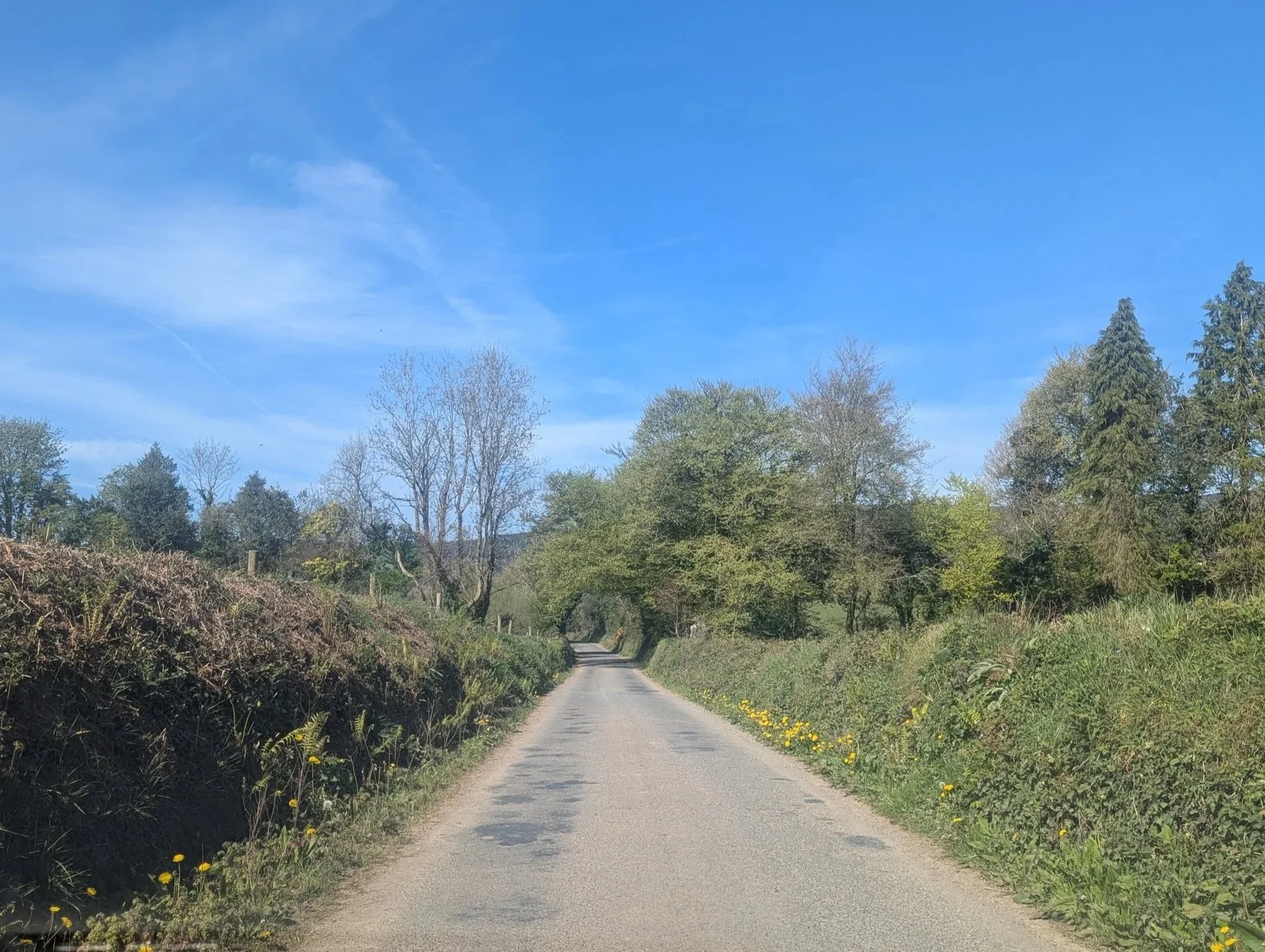
Dandelion time and dandelion thoughts driving down spring lush roadsides…
Day 1. The difference of a few weeks is wild - a vastly different drive from Belfast, this time heading south. Spring has sprung in Ireland at last by mid-April and once we leave the motorways and arterial Dublin routes, the roadsides are abundant with ferns, dandelions and cleavers, overhung with trees not quite at full canopy.
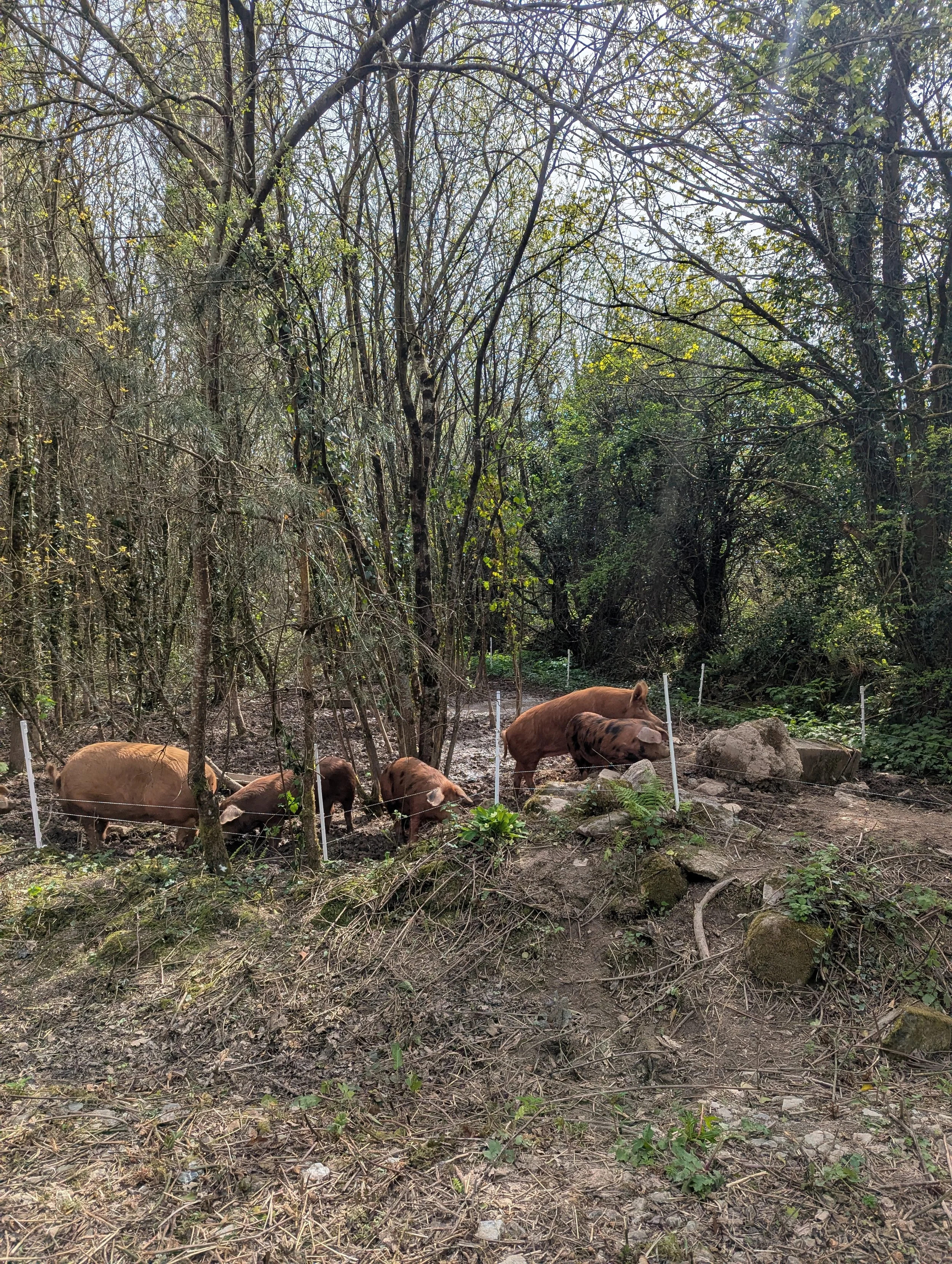
My first stop is Blackbird Cultur-Lab - a creative cultural laboratory based within a working farm. Karla greets me and we begin with a walk through the land - meeting the pigs, the trees, and the solar panel fields. She shares the story of her journey from Mexico to rural Wexford and how in the process learning about regenerative agriculture forced her to ‘rethink everything she knew about the arts and culture’. Now the idea of ‘holistic management’ (a systems thinking approach to managing resources) has become the guiding principle for her and partner Oisín as they try to navigate bureaucracy and established ways of working both as farmers and within the cultural ecology of the area. We chat lots about soil health as the foundation for everything. You need to feed the soil, minimise disruptive inputs and to ‘not chase production at all cost’. Comparing agriculture and creative ecology we talk about artists as microbes (which need to be fed and nurtured too!) and working in distributed models to encourage diversity and resilience. We have a very limited view of what a ‘successful’ artist is and it’s not helping the overall ecosystem’s health. In my notes I see ‘GROW MULTIPLES ROOTS’ is written in caps - I can’t remember the exact context but it can apply to so much of what we discussed.
The striking black barn-like building is Karla and Oisín’s self-built home with living spaces for them and their family as well as work and ‘project space’ for artists and performers. Over a gorgeous home-cooked lunch we talk about what makes a good visit/residency/collaboration. The key thing for them is that it's always something generative that involves an exchange of ideas. In order to feel comfortable opening your home it needs to be for ‘something relational not just transactional’. We talk about balance and boundaries - especially when work and home life overlap - resisting the urge to chase more output and to remember to try to live your values, something that requires ongoing monitoring, reflection and adjusting. I say goodbye and leave for the BnB I’m staying at with a full belly and a head full of hopeful ideas about regenerative futures.
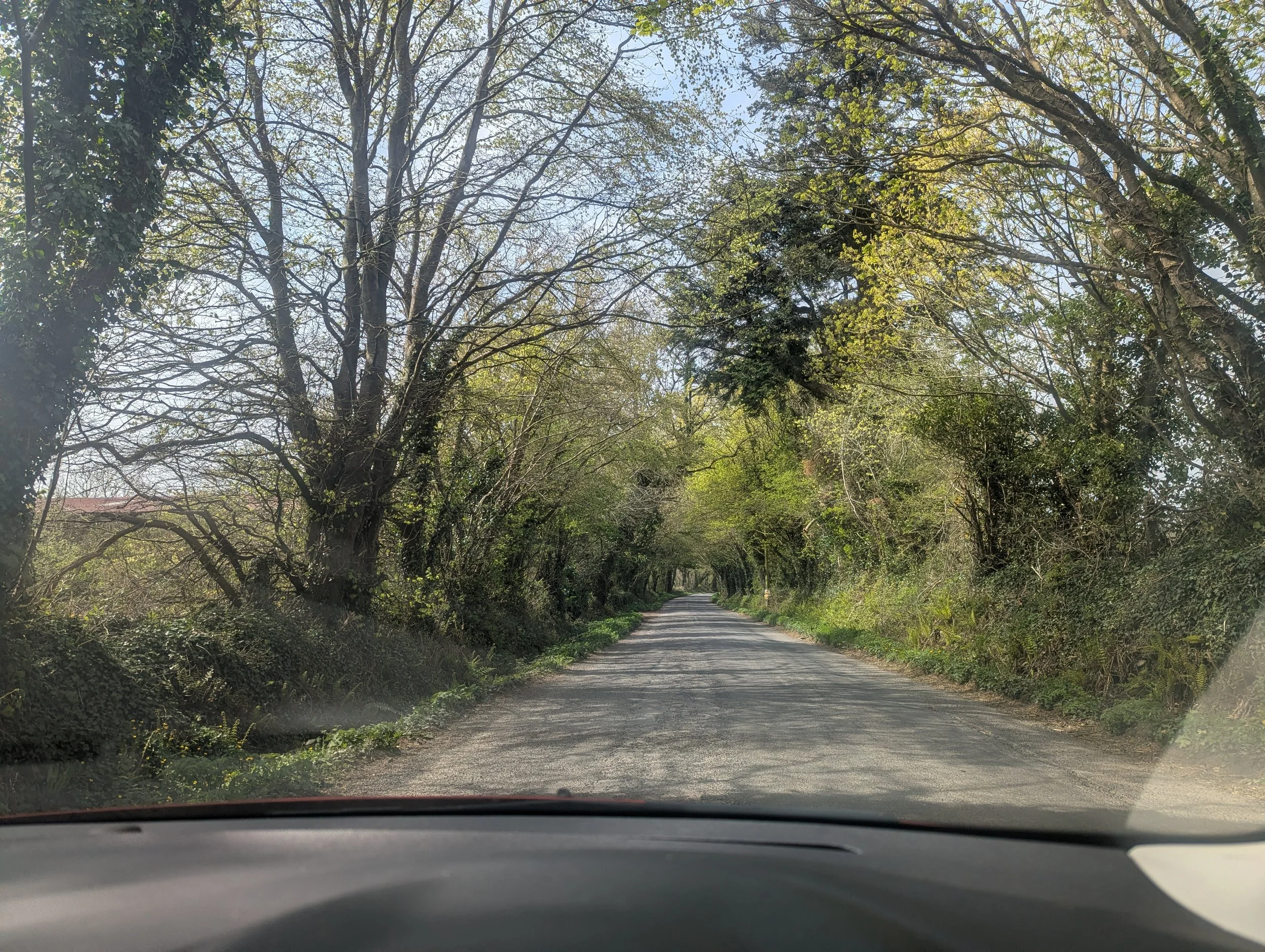
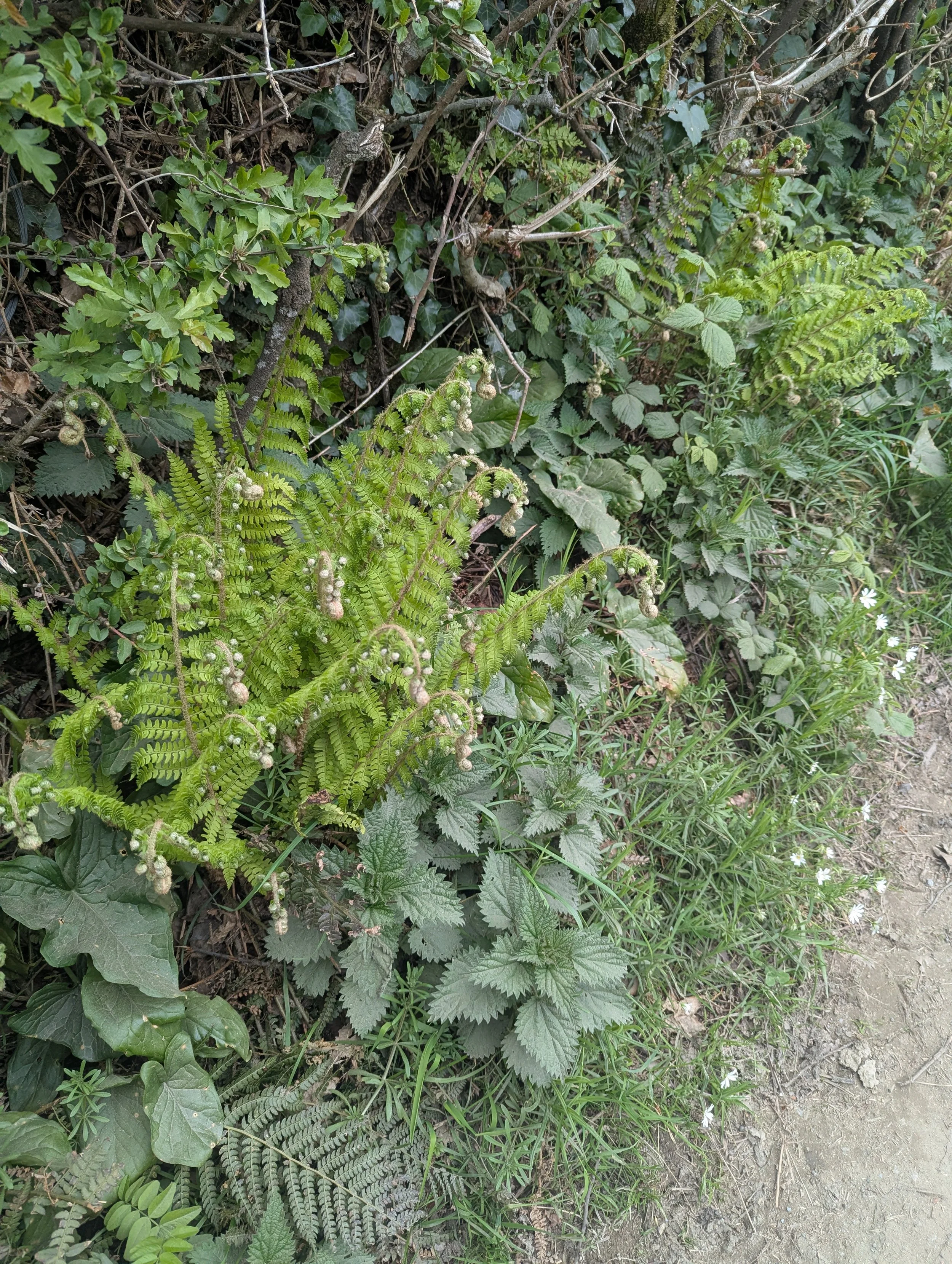
Day 2. I’m crossing rivers into Co Kilkenny, down more winding spring-lush roads to Callen to meet Rosie, Creative Director at Workhouse Union (WU). This is another organization who's consistently recurred in my awareness for several years so I am excited to chat and find out more. It’s hard for me to summarise what WU are about (read their website) - similar to Deveron Projects who I met in Scotland, their exact focus has changed, morphed, grown and pivoted over their long years in operation. I think my best attempt would be to say: they do creative placemaking work - that’s laminated with care, collaboration and complexity.
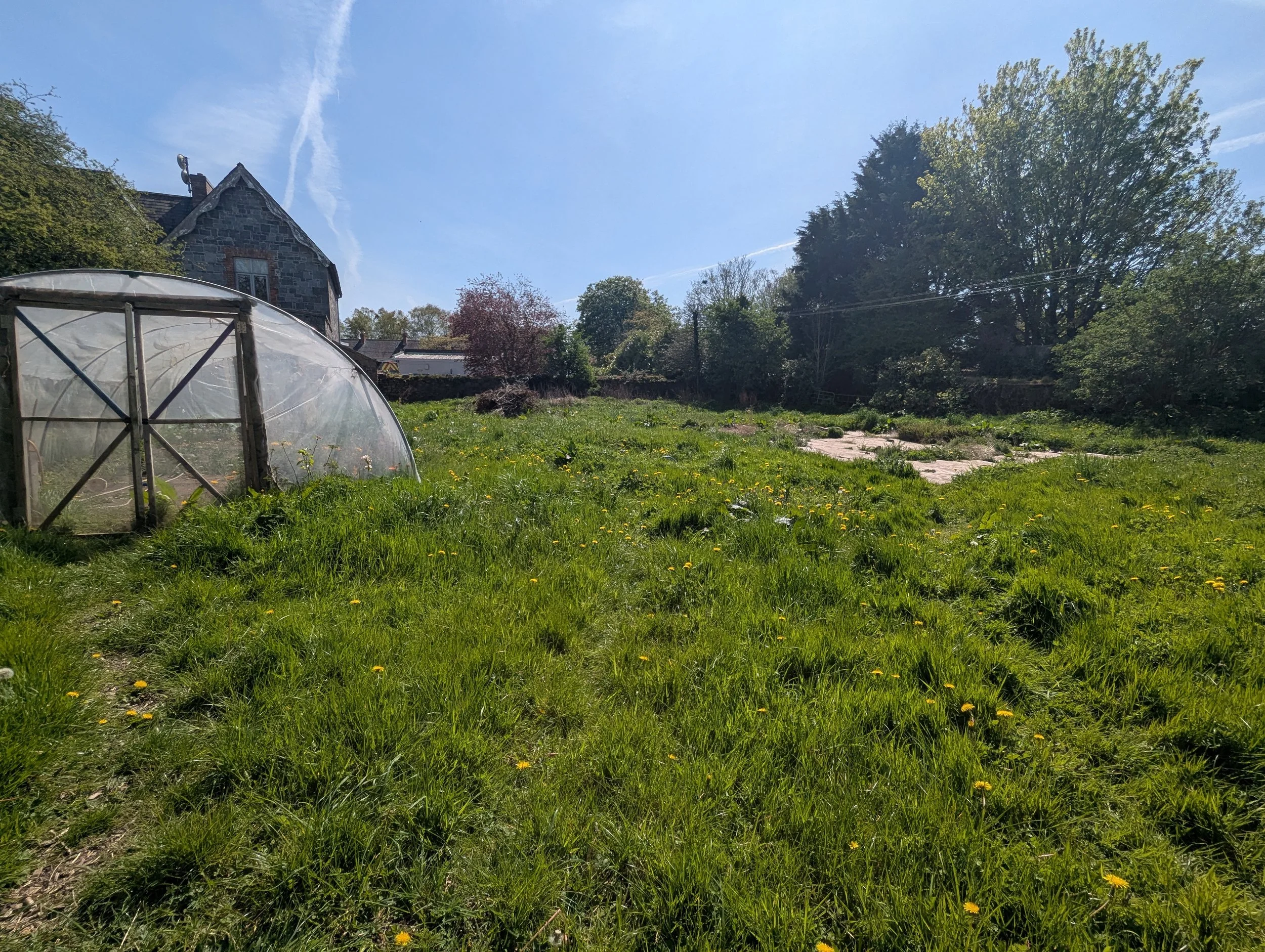
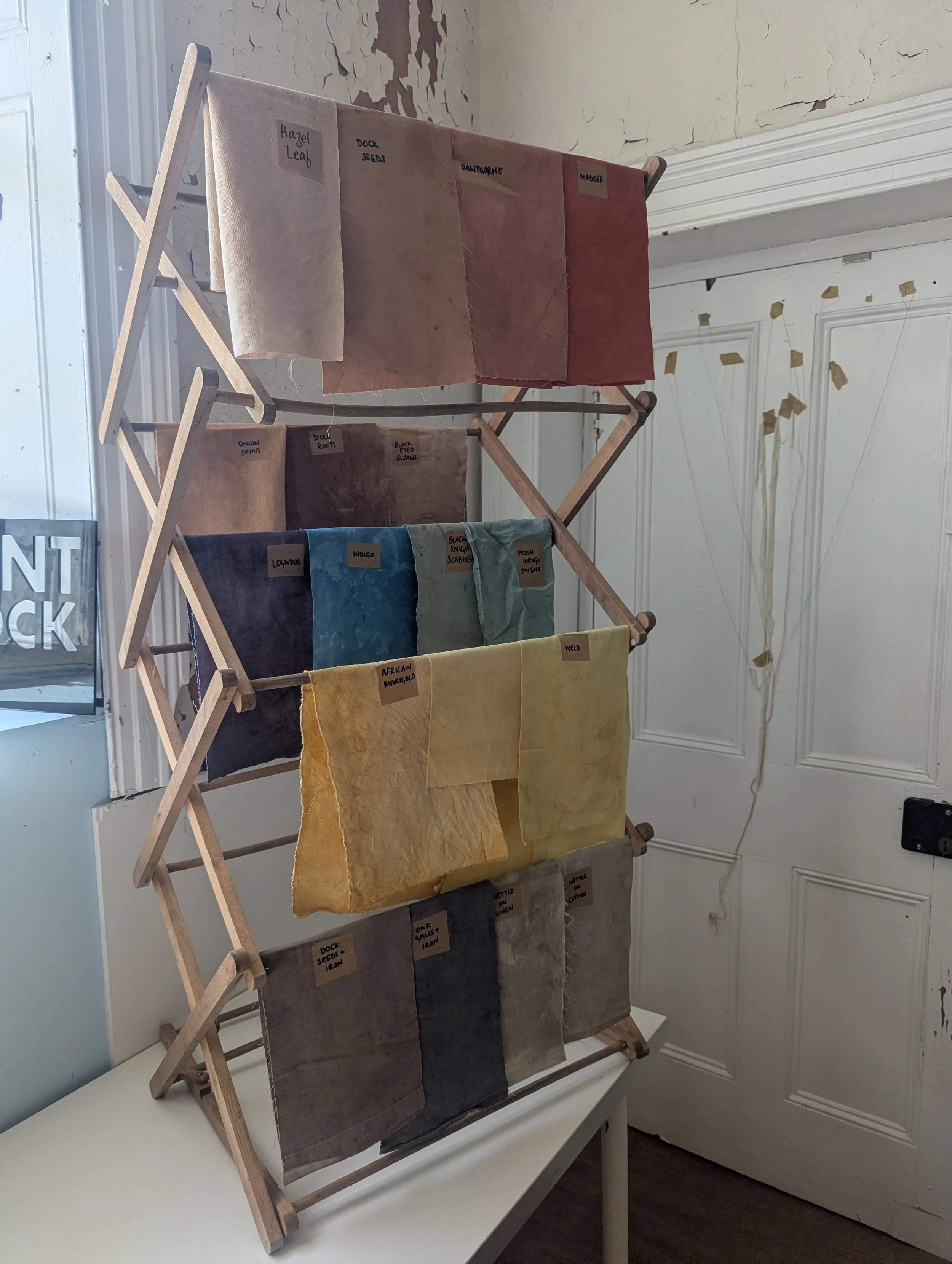
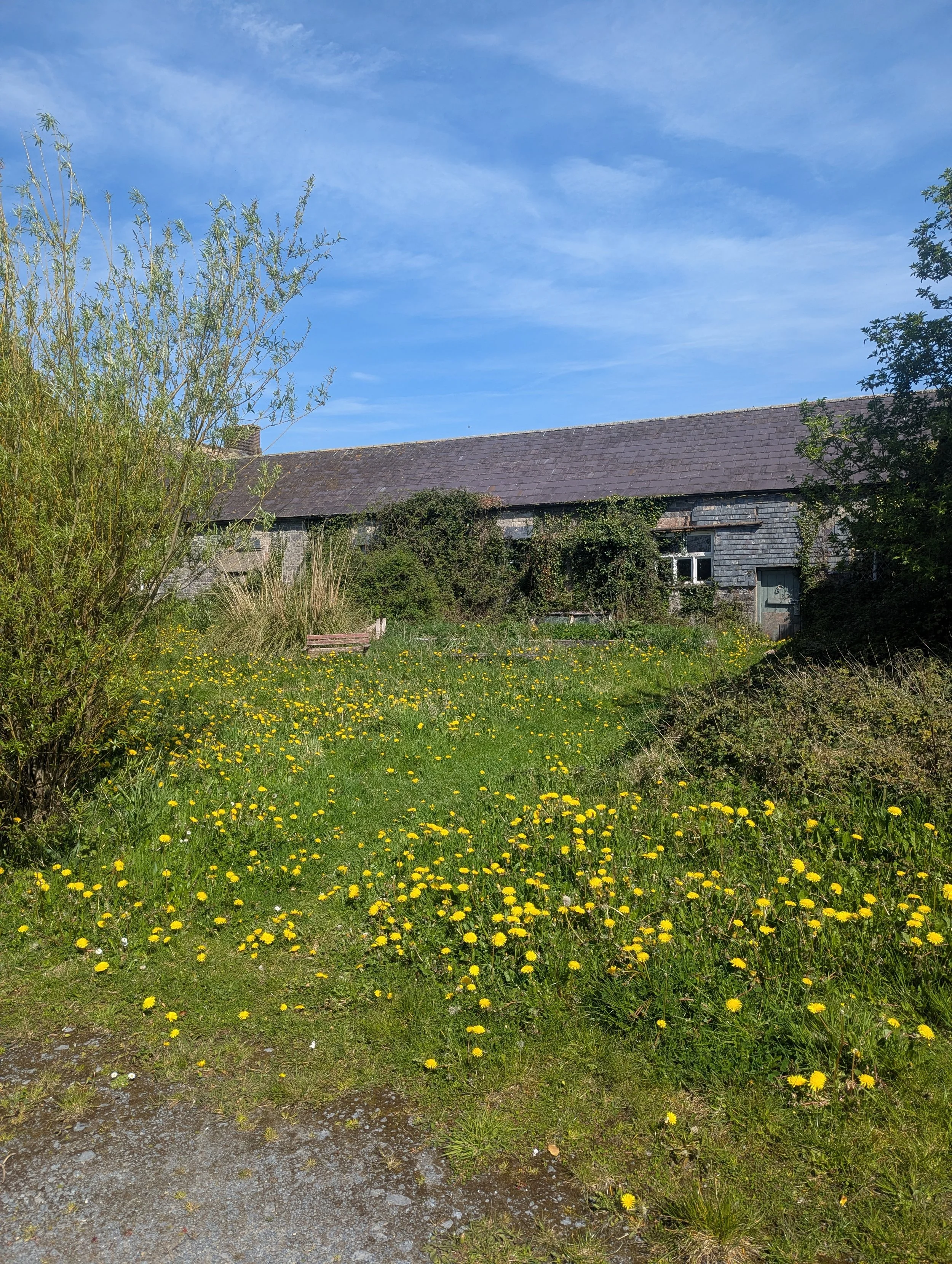
To start Rosie shows me around the former workhouse where they are based in the warmer parts of the year. The site includes the Print Block Workshop, their Prologue Reading Rooms and the Colour Field Dye Garden (not yet planted for 2026 but the grass outside is strewn with yellow dandelions, tiny shiny suns). There are big plans for the site linked to Community Ownership and Community Land Trust developments - regeneration plans have previously gotten to a certain point and failed. I ask if it’s emotionally hard seeing the other parts of the site gradually decay year on year - but Rosie has a quiet faith that things will work out in the end, she’s seen other long term, ‘seemingly impossible’ projects happen in their town and elsewhere. She also notes that it’s helpful that Workhouse Union has different long term projects running simultaneously - this site is not their only mountain. I admire this attitude - it reminds me about our talks on planting forests yesterday at Blackbird - you need to begin these projects with patience and hope, keenly aware that they can’t be rushed.
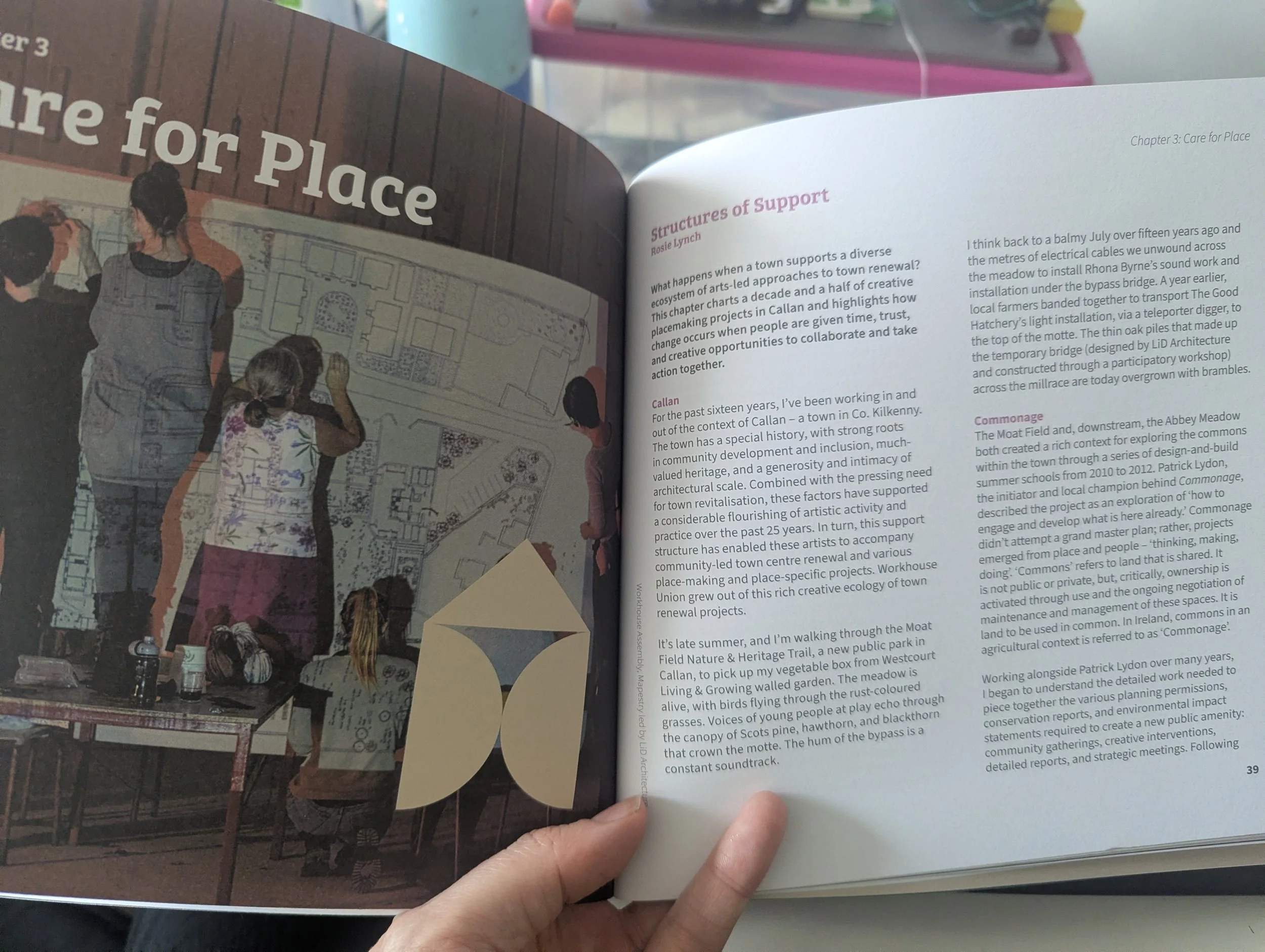
Callan has a dense and diverse selection of creative practices which are ‘in community, not competition’. Rosie suggests we walk into a cafe in town which will allow us to see more of the places and spaces in Callen’s town ecology which are important for understanding the story and context of how they’ve evolved. Town ecologies are made up of multiple layers and different perspectives and people see everything through their own lens. Rosie describes WU as a facilitator embracing complexity and leaving space for lots of voices. It can be a messy space to work within but they position themselves in the softer, quieter side of place engagement and development. I’m gifted a copy of their ‘Making Neighbourhoods’ publication so I can come back to some of these rich ideas later.
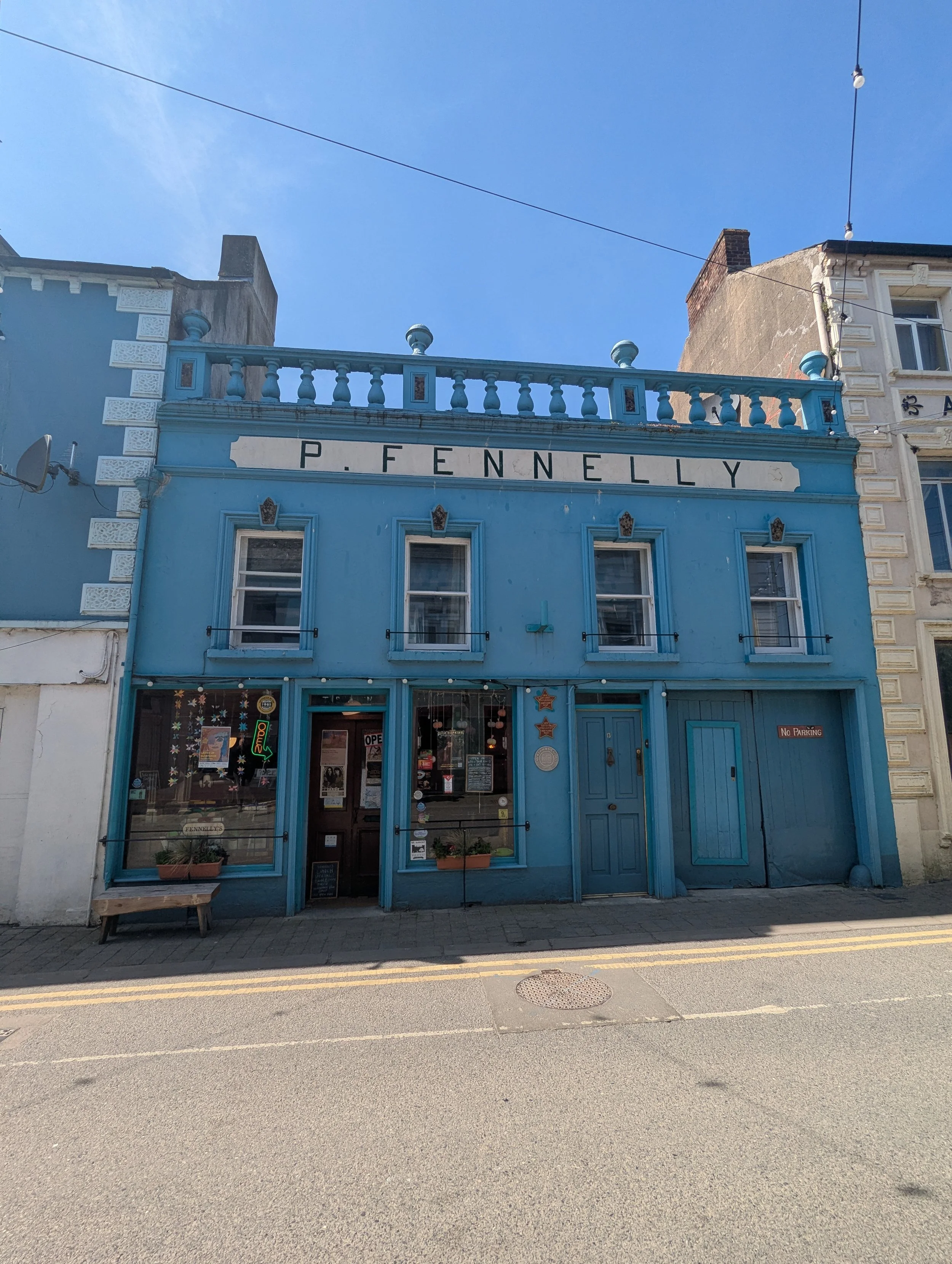
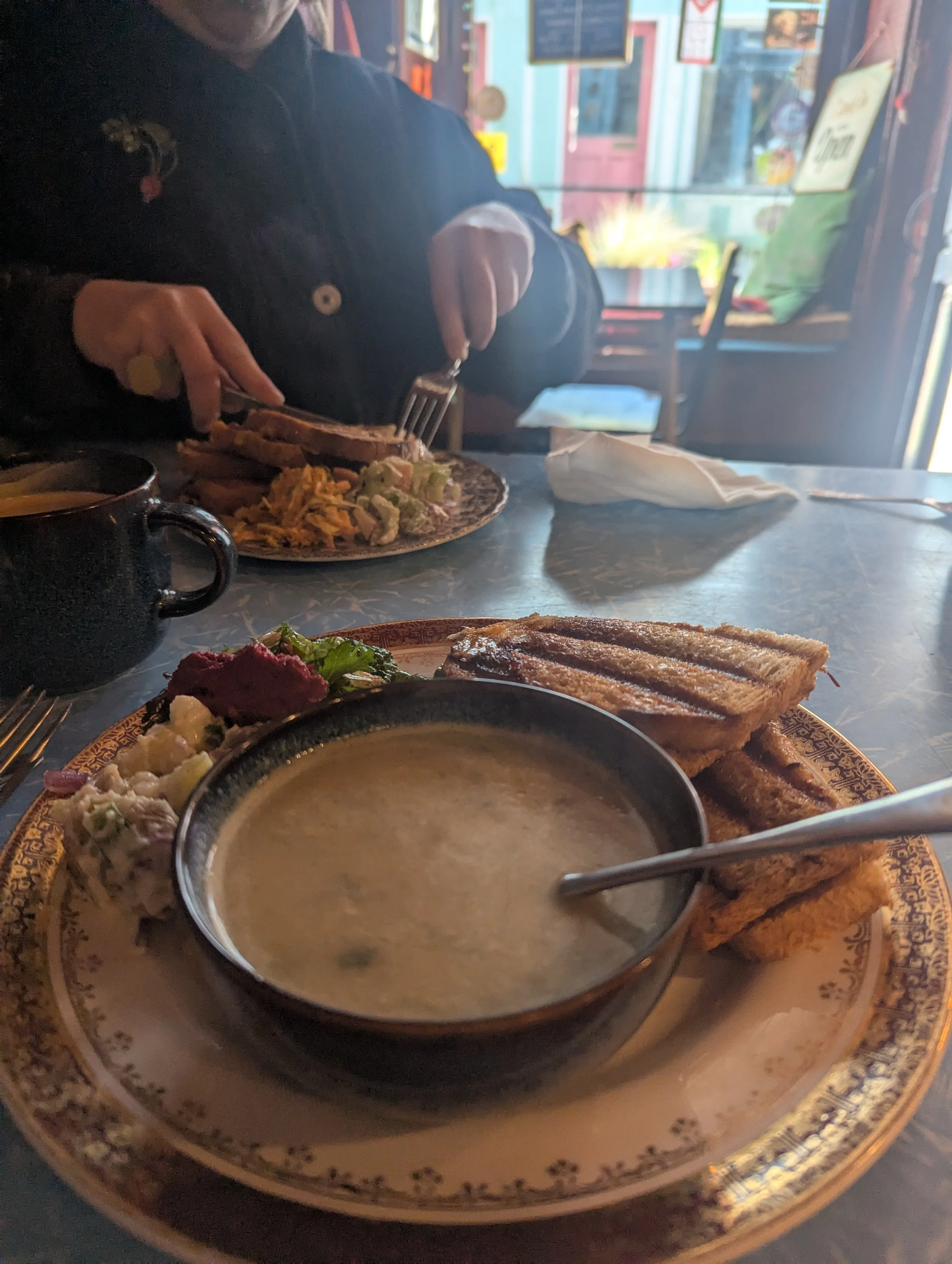
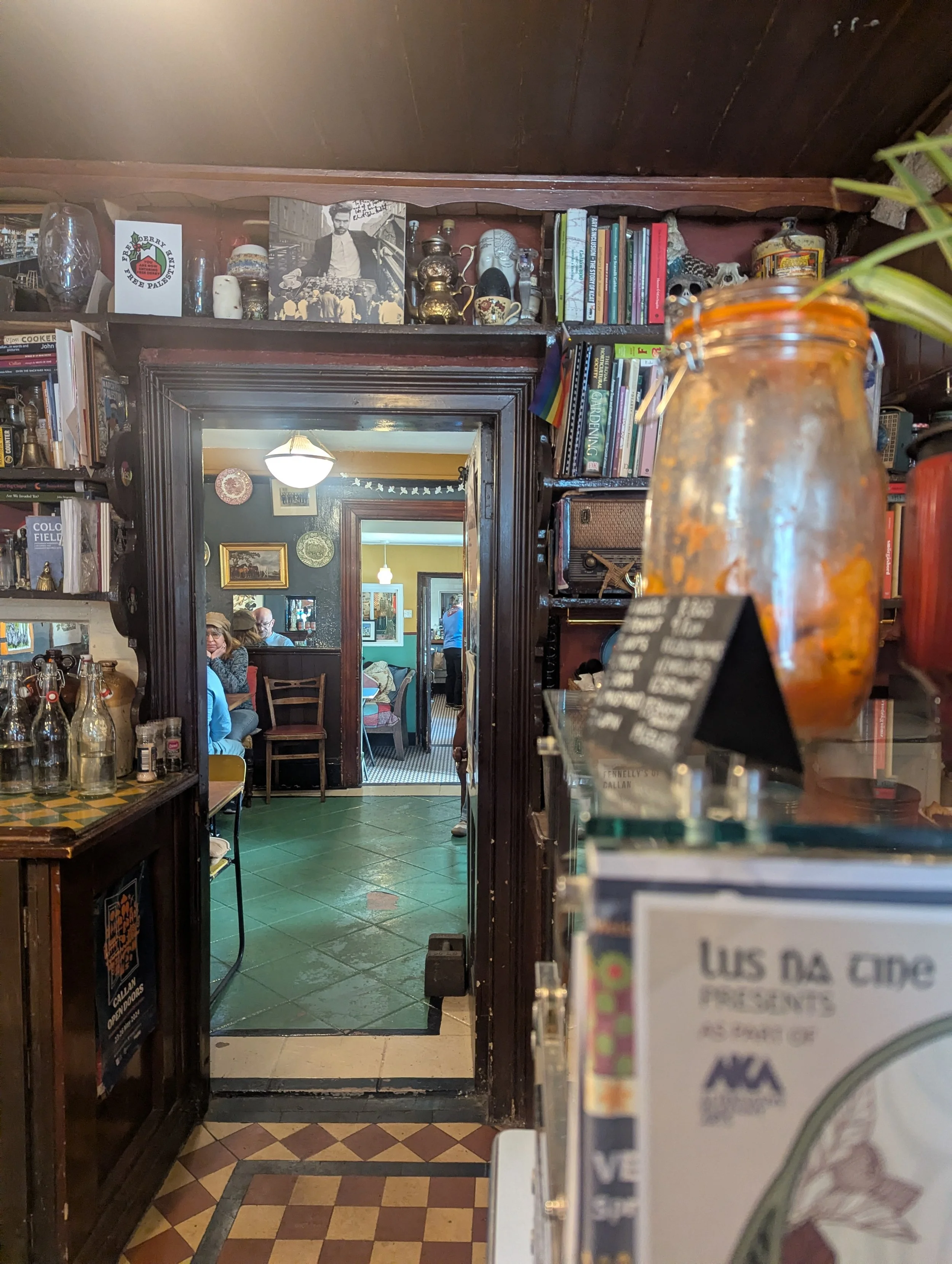
In Fennellys Community Café we chat with owner Etaoin (also an artist) about a) how nice it is to sit in a cafe that feels like itself, not a copy of all other cafes b) what to eat and c) her interest in ‘kindness as a form of soft power’; how acts of kindness and community are often the quiet forces shaping the world but they don't make it onto the news. Care as the antidote to violence - think ‘riparian zones rather than flood walls and defensive architecture’. Now isn’t that just the most nourishing thought to be served alongside a warm bowl of soup. After eating we visit KCAT Arts and the Powerhouse - chatting more about collaboration, shared resources and experiences. WU sees art as an engagement tool for the community. Their work in the town and beyond is that of an often invisible support structure (like the boning in a corset I say). Art and artist’s role within that is always instrumental - instrumentalism in the arts gets a bad rep, Rosie notes, but as long as it’s not being ‘done onto anybody’ it has a really useful place for supporting social inclusion and social justice. I think about, ‘nothing about us, without us’ a phrase which originated in the disability rights movement and appears in the opening lines of the Making Neighbourhoods publication. So often art is side-lined as some unknowable extra, a non-essential luxury - but artists too live in neighbourhoods, are part of communities, and like most ordinary people want a fairer, kinder, healthier future. Care is key - this thought keeps recurring as it did on my first trip - how we care for ourselves, our things, our place, our communities, our world - it's complex though because that too means different things to different people. Phew, there’s a lot to think about. I head to Kilkenny City for the rest of the afternoon for a walk about to visit some galleries, then flick through my gifted booklets and publications in the sunshine, how delightful.
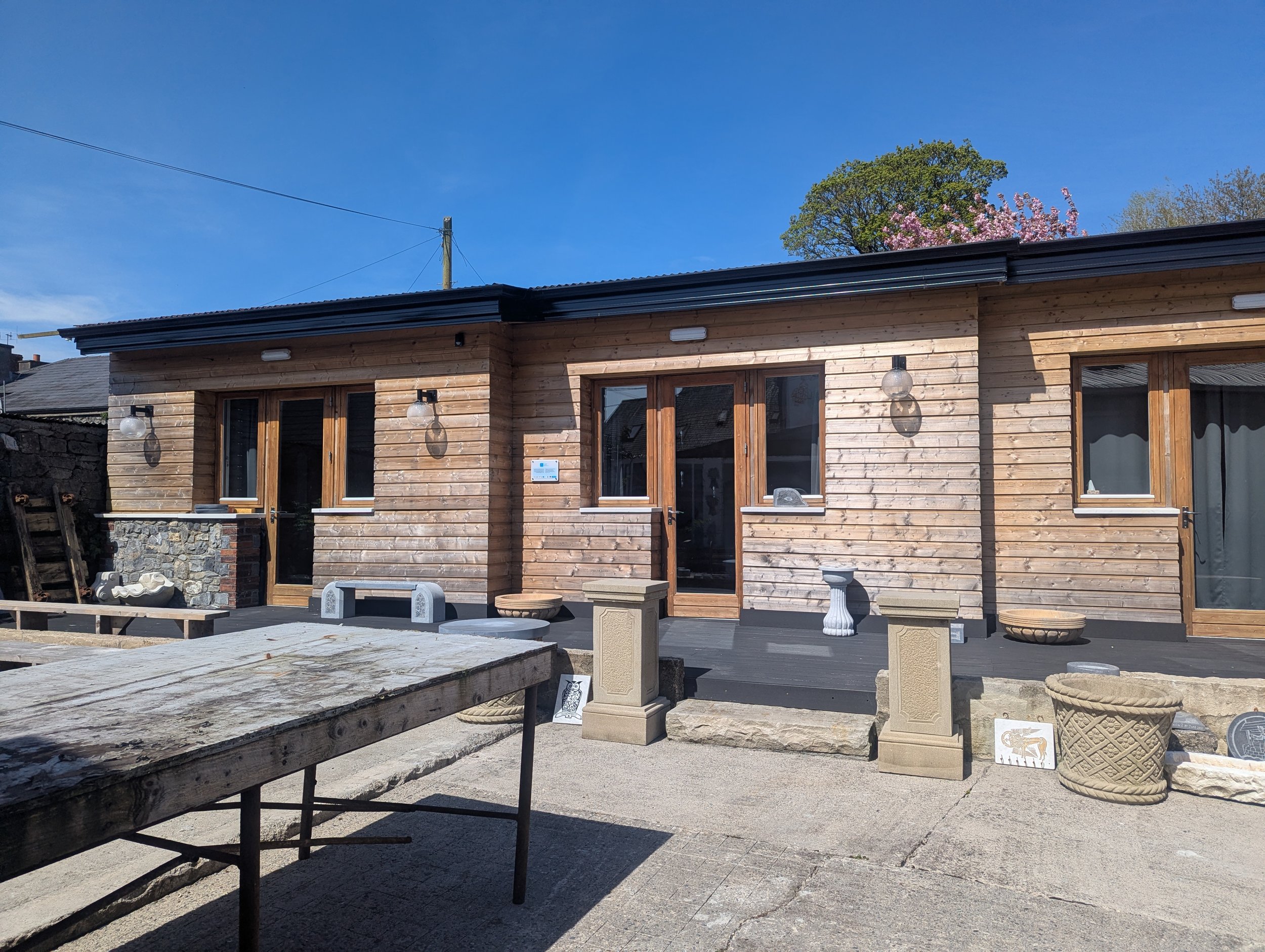
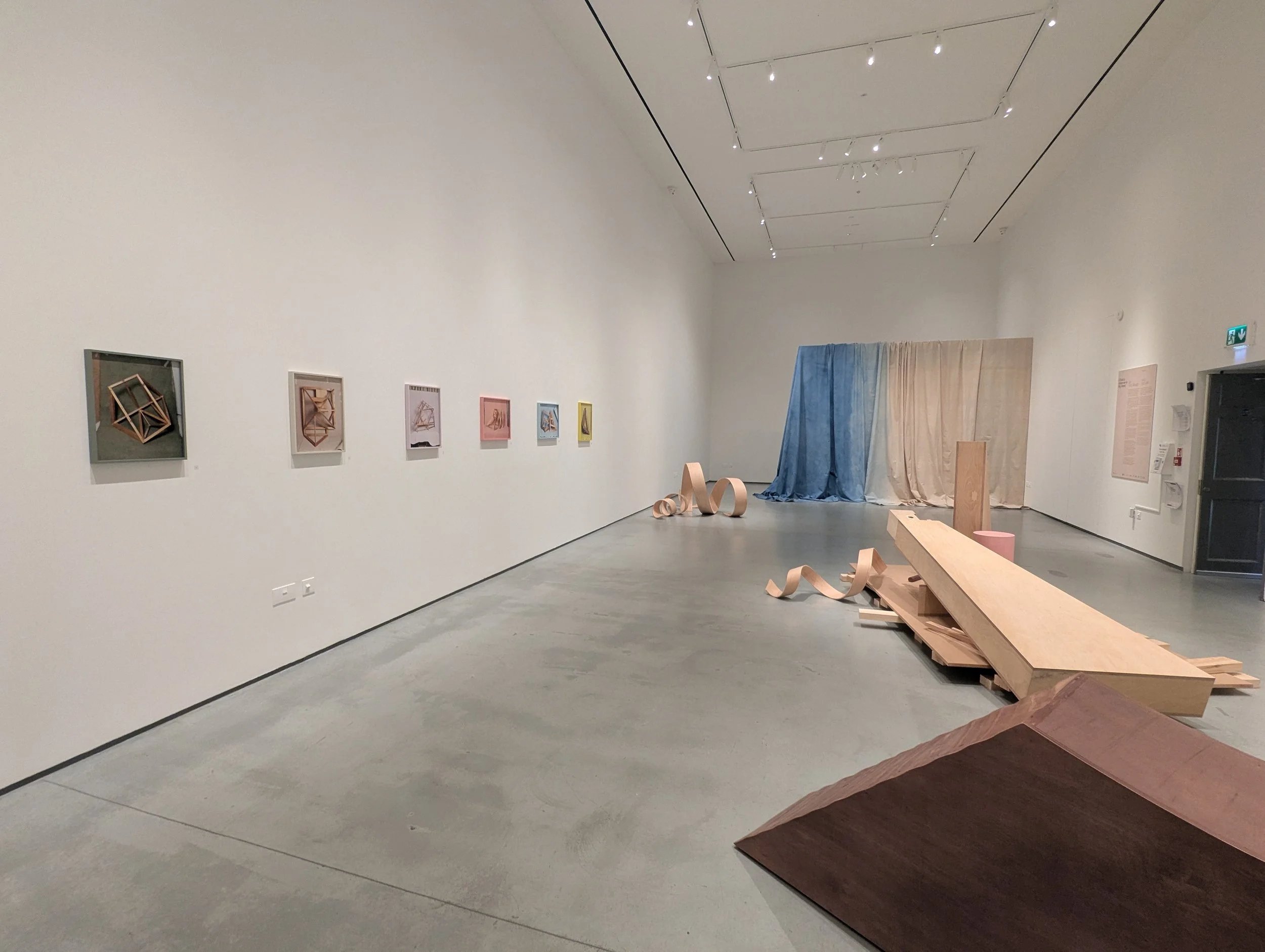
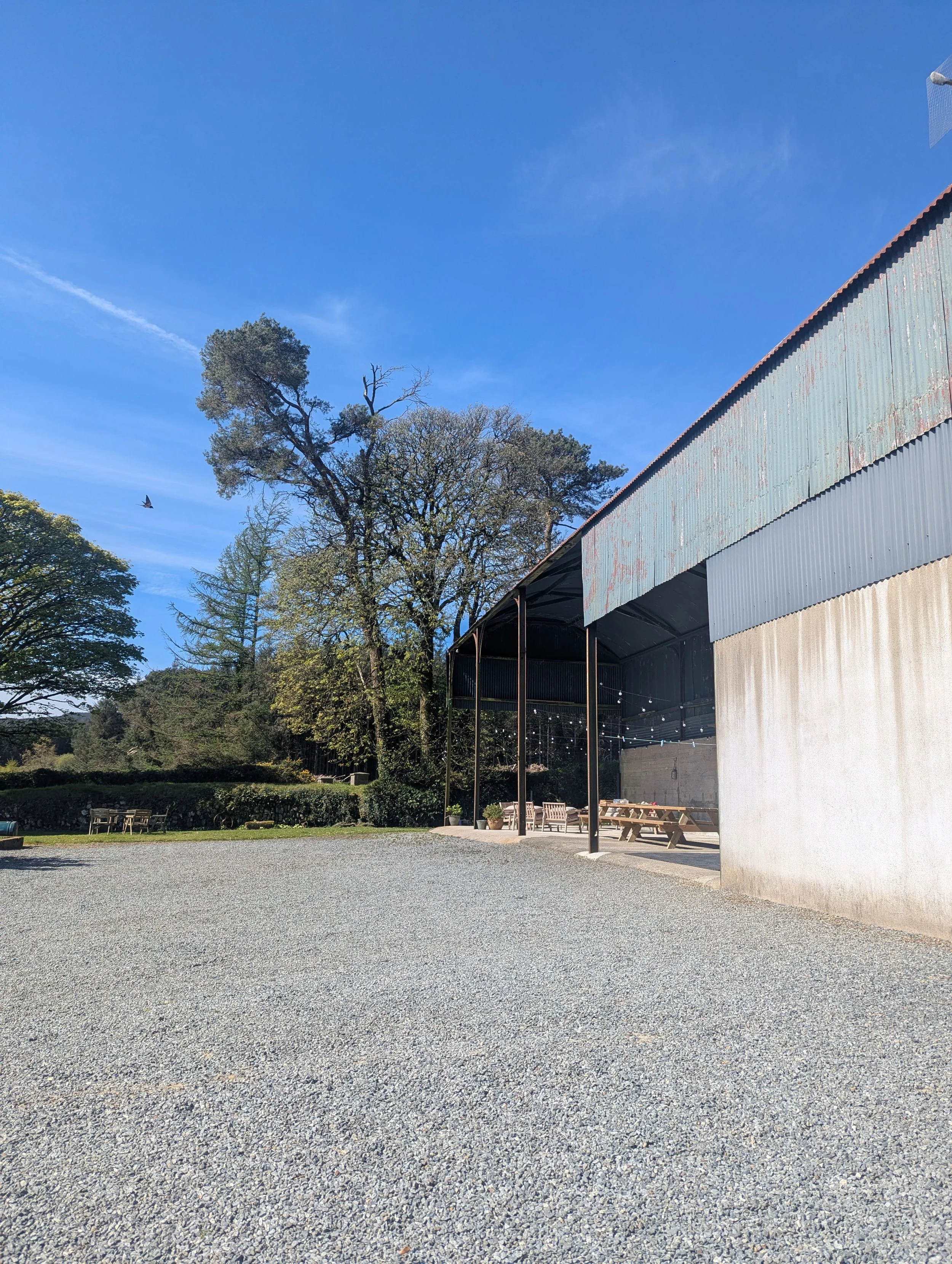
Day 3 and wow, this trip has flown. For my final official stop I’m back in rural Wexford to visit Cow House Studios (CHS). CHS is an independent school and residency centre - a long term and ongoing project of the artist co-directors Rosie O’Gorman and Frank Abruzzese - located on the O’Gorman family farm. The beautiful stone building, formally a cow house, is now the heart of their studio operation, kitted out with a range of resources, equipment and materials for facilitating a range of multidisciplinary art practices. The studio is occupied today with the folks from Kunstverein Aughrim's Creative Producer programme (sure enough, there are some familiar faces in the group - good old 2 degrees of separation Ireland!). We sit outside chatting - enjoying the continued sunshine - next to the other central building, ‘The Barn’, which houses their accommodation rooms, communal space and a busy kitchen/dining area.
We talk about ecology and sustainability - including commitments they have already embraced as an organization in this rural context (like solar panels) as well as some of their longer term ambitions for native woodland and home grown veg. As an organisation remaining independent and not reliant on public funding has been a conscious sustainablity choice - their relationships and partnerships with other local and international groups are really important for sustaining this (I guess we’re never really independent - always, always interdependent). There is an inherited responsibility towards long-term thinking which comes from being based on the family farm. Rosie notes that farmers tend to be resourceful and creative people and is really grateful for the trust her parents put in their vision for the studio. It certainly takes courage and commitment to set out to do something different but art is about ‘rubbing up against the edges of things’ and CHS is still very much a family farm operation albeit with an alternative model to previous years - thoughts of legacy, land and the future persist.
I asked about how they approach the residency programme and what support looks like. Residencies are always carried out in groups so that there is energy and engagement between the artists, space to bounce ideas around - it’s never just someone working in solitude and they provide some limited technical and critical support too. The point of their programme is always about development and process - providing time and space not being too prescriptive. As artists themselves there is a level of implicit trust in how they select - not asking for complete proposals on application as they recognise that this too is creative work and usually, the planned proposal changes anyway on arrival. They see their role as helping facilitate artists to be productive by ‘removing the friction of everyday life’ (what a great phrase that is! We all know the friction - the dishes screaming in the sink, the various responsibilities, phone calls and ‘quick qs’ which interrupt your thoughts and best laid plans). Hospitality is a key part of the offering so that the time people have on site is really nourishing and nurturing. Feeding people was a natural progress and in many ways their decision to take on a full time chef the catalyst that led to the year-round programme model they currently have.
I’m curious about energy - since hosting and teaching can take a lot from the facilitators. For sure finding balance can be tricky but Rosie and Frank definitely feel that CHS is an extension of their own practices as artists and educators - taking energy yes but also giving them back a lot in terms of connection, ideas and insights. Of course, things ebb and change with life circumstances - sometimes personal projects overlap with the development of CHS - for example recently building the sauna was the creative project for Frank, but it's also a potential way of opening up the site going forward, to a community beyond artists and students.
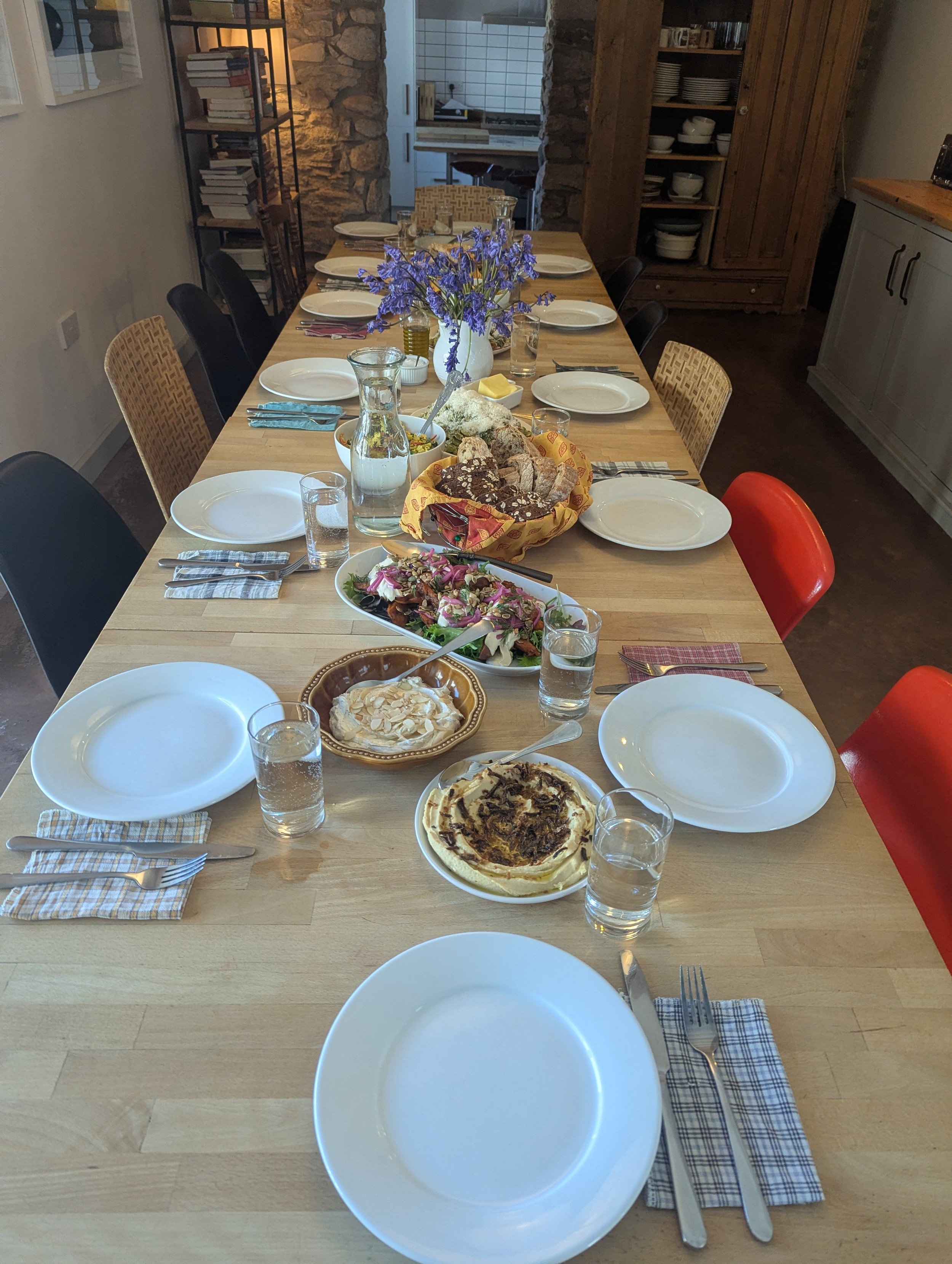
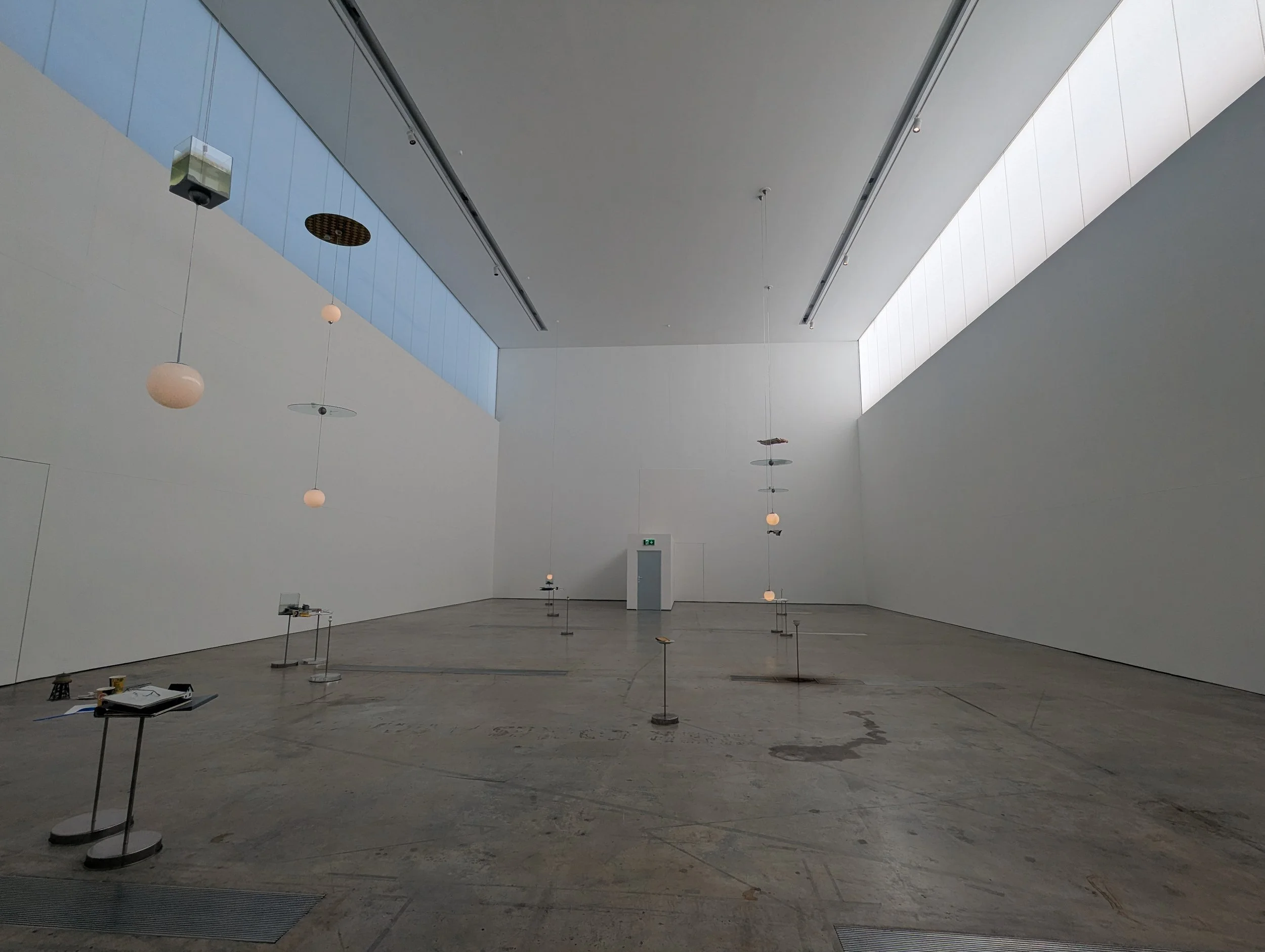
As a wonderful unexpected treat I’m invited to join everyone for the most delicious lunch as there’s been lots of food prepared for the Kunstverein group. It’s great to hear more about the Creative Producers programme - not least because I wanted to visit there too but wasn’t able to fit it in this trip, serendipitous? Maybe! One thing that comes up over lunch is how beneficial all the informal networking can be - the pub chats post gallery opening, the in-studio problem solving etc - all the soft power of connection and community, which is a big part of what the programme is designed to support, and a key part of my project too. Another rich and nourishing meal served with great conversation. Yum. I say goodbye and head back up the road - still abundant with dandelions - with a side-quest to Carlow to see the impressive gallery spaces of VISUAL. What an enriching few days on a whole range of levels - pollinate, aggregate, propagate - my parting thoughts relate to long term thinking and alternative ways of working, things can and should change but when planting forests - time is crucial - I wish I had more time to spend here but at least I’ve still got one more trip to make next month.
TBC
I was grateful to receive an Arts Council NI Project Grant in 2025/26 for some research and development work around environmentally conscious production and curatorial practice, thinking about what we create, and with what materials but also the ecologies of how work is produced, supported and sustained. Part of the proposal was for dedicated time, slow travel and having meaningful conversations with other artists, curators and programmers about all of the above.
